
Introduction
Every cat parent knows the sound. That sharp, rhythmic retching coming from the living room usually ends with a wet, cylindrical mass of fur left on your carpet. Hairballs, medically known as trichobezoars, are a natural side effect of a cat’s meticulous grooming habits. As your feline companion licks its coat, tiny backwards-facing hooks on its tongue catch loose fur and swallow it.
Most swallowed hair moves smoothly through the intestinal tract and exits quietly in the litter box. However, when fur accumulates faster than the gut can clear it, it forms a dense clump inside the stomach. This leaves pet owners scrambling to find an effective, safe solution to keep their pets comfortable and healthy.
Navigating the pet care aisle can feel overwhelming with all the competing options. You may have heard about using plain petroleum jelly from your medicine cabinet, commercial malt pastes, or shifting toward specialized high-fiber wet diets. Selecting the right treatment requires understanding how each option works inside your cat’s body.
In this guide, we will evaluate Hairball Remedies for Cats: Vaseline vs Malt Paste vs High-Fiber Wet Diets. We will examine the safety, effectiveness, pros, and cons of each remedy so you can choose the best approach for your cat’s specific digestive needs.
Understanding How Cat Hairballs Form and Why They Cause Trouble
Before comparing treatments, it is essential to understand why hairballs develop in the first place. A healthy cat spends up to half of its waking hours grooming itself. While short-haired breeds pass fur easily, long-haired breeds or cats going through seasonal shedding ingest significant amounts of hair daily.
Under normal conditions, healthy gastrointestinal motility pushes swallowed fur out through regular bowel movements. When intestinal motility slows down or the hair volume becomes excessive, the fur stays trapped in the acidic environment of the stomach. Over time, gastric churn rolls this loose hair into a tight, felt-like ball.

When a hairball grows too large to pass through the narrow pyloric sphincter into the small intestine, your cat’s stomach reacts by vomiting. While an occasional hairball is generally harmless, frequent retching signals an underlying problem. Chronic hairballs can lead to painful intestinal blockages, severe constipation, or dehydration if ignored.
Vaseline as a Hairball Remedy: Is Plain Petroleum Jelly Safe for Cats?
Using plain petroleum jelly, commonly known by the brand name Vaseline, is a classic home remedy passed down through generations of cat owners. The idea behind this quick fix is simple lubrication. Petroleum jelly is an indigestible hydrocarbon that travels through the digestive tract without breaking down, coating swallowed fur so it slides out through the stool.
The Mechanics of Using Vaseline
Pet owners usually apply a tiny smear of plain petroleum jelly—about a quarter to half a teaspoon—onto a cat’s paw or nose. Because cats are instinctive groomers, they lick off the jelly immediately. Once ingested, the non-absorbable fat lubricates the stomach lining and the trapped hair mass.
Benefits of Petroleum Jelly
-
Cost-effective and widely available in most households.
-
Indigestible nature ensures it acts as a mechanical lubricant without adding calories.
-
Non-toxic base formulation when pure and unflavored.
Risks and Drawbacks of Vaseline
Despite its long history, plain petroleum jelly comes with notable drawbacks. First, plain Vaseline lacks flavoring, meaning many cats dislike the texture and actively resist taking it. Forcefully smearing it on a cat can cause unnecessary stress or messy fur.
More importantly, overuse of petroleum jelly can interfere with your cat’s nutrient absorption. Because it coats the intestinal lining, it can block the absorption of fat-soluble vitamins like vitamins A, D, E, and K over extended periods. Veterinarians rarely recommend unformulated petroleum jelly as a primary, long-term solution when safer, purpose-built products exist.
Malt Paste: The Tasty Commercial Lubricant Solution
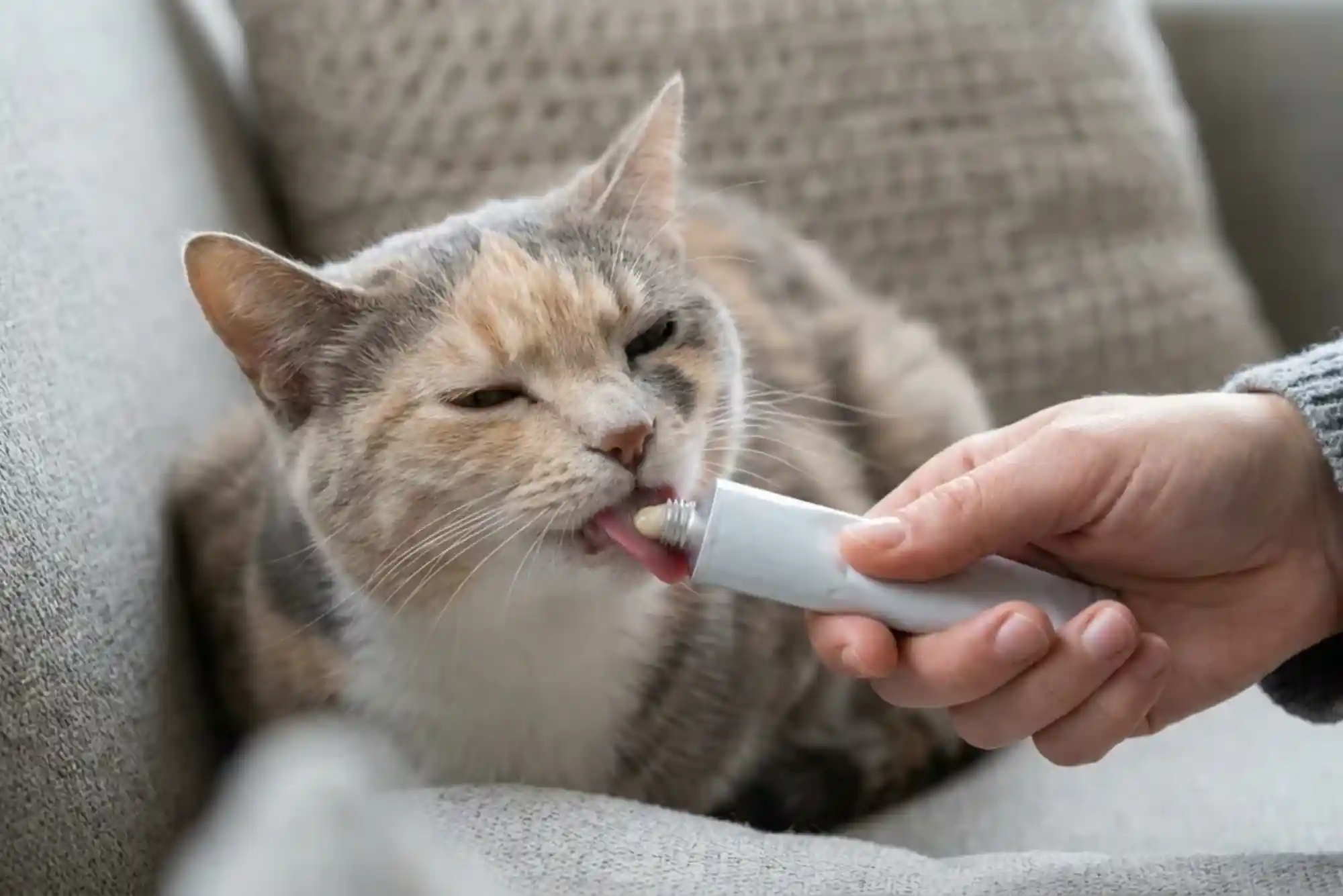
Malt paste is one of the most popular commercial products specifically formulated to manage feline hairballs. Unlike plain household petroleum jelly, malt paste combines lubricating ingredients with delicious malt extract, oils, and added vitamins to create a palatable treat.
How Malt Paste Works
Malt paste utilizes a dual-action mechanism. It contains mineral oils or purified petrolatum compounds that coat the swallowed hair, preventing it from binding together into hard masses inside the stomach. Simultaneously, the malt extract provides a sweet, aromatic flavor that most cats eat voluntarily straight from the tube or off your finger.
Advantages of Using Malt Paste
-
Highly palatable formulation that cats view as a reward rather than medicine.
-
Contains balanced ingredients, including essential fatty acids and added vitamins to offset nutrient loss.
-
Easy dosage controls designed specifically for feline weight standards.
-
Softens stool, aiding cats prone to mild, recurring constipation.
Disadvantages of Malt Paste
While malt paste is effective, it is not ideal for every feline diet. Malt extract contains natural sugars and extra calories, which can pose a problem for diabetic cats or pets on strict weight management plans. Furthermore, malt paste serves as a symptomatic treatment; it lubricates existing hair but does not fix underlying digestive sluggishness or excessive shedding.
High-Fiber Wet Diets: The Natural Preventive Strategy
While lubricants like Vaseline and malt paste treat hairballs mechanically, high-fiber wet diets approach the issue from a nutritional standpoint. This method aims to improve overall gastrointestinal health, ensuring that hair passes continuously through the gut before forming a dangerous mass.
How High-Fiber Wet Diets Combat Hairballs
Fiber plays a vital role in feline digestive health. In specialized hairball control wet foods, a combination of soluble and insoluble dietary fibers—such as psyllium husk, beet pulp, and powdered cellulose—is added to the meat base.
Insoluble fiber adds gentle bulk to the stool, stimulating normal peristalsis, which is the muscular contraction of the intestines. This process sweeps loose fur out of the stomach and into the litter box daily. Meanwhile, the high moisture content of wet food hydrates the gut contents, preventing dry, trapped hair masses from forming.
Benefits of High-Fiber Wet Foods
-
Addresses the root cause by boosting natural digestive motility.
-
Provides high hydration levels, supporting kidney and urinary tract health along with digestion.
-
Offers a holistic, long-term daily management strategy without needing extra pastes or lubricants.
-
Keeps stool regular and prevents painful constipation.
Considerations for High-Fiber Diets
Switching your cat to a high-fiber wet diet requires a careful, gradual transition over 7 to 10 days to avoid upset stomach or diarrhea. Additionally, cats with sensitive stomachs or specific food allergies may need specialized prescription diets under veterinary supervision.
Comparative Breakdown: Vaseline vs Malt Paste vs High-Fiber Wet Diets
Choosing the best remedy for Hairball Remedies for Cats: Vaseline vs Malt Paste vs High-Fiber Wet Diets depends on your cat’s specific health profile, preference, and lifestyle.
Effectiveness and Speed
When you need rapid relief for an active hairball, malt paste and petroleum jelly work faster because they immediately coat the hair mass with a slippery barrier. High-fiber wet diets take longer to yield noticeable results, working continuously over weeks to build consistent, smooth bowel elimination.
Ease of Administration
Malt paste wins easily in terms of palatability. Most cats happily lick it straight from the tube. High-fiber wet foods are also easy to feed as part of regular mealtimes. Plain Vaseline is the hardest to administer because cats dislike the unflavored texture, often requiring you to smear it on their fur.
Long-Term Health Impact
High-fiber wet diets provide the healthiest long-term solution. They promote overall gut motility, support kidney health through hydration, and prevent hairballs naturally. Malt paste works well for weekly maintenance or shedding seasons, while plain Vaseline should remain a last-resort emergency alternative.
Essential Tips to Prevent Cat Hairballs Naturally
While dietary changes and remedies help manage internal hair, preventing excess hair ingestion in the first place remains the best defense.
- Maintain a Daily Brushing Routine: Use a high-quality slicker brush or deshedding tool to remove loose fur before your cat swallows it during grooming.
- Increase Daily Water Consumption: Encourage drinking by placing multiple water bowls around your home or using a circulating cat water fountain.
- Add Safe Natural Fiber: Mix a quarter-teaspoon of pureed plain canned pumpkin into wet food for an extra boost of digestive fiber.
- Schedule Regular Grooming: Long-haired breeds benefit immensely from professional grooming sessions, particularly during spring and summer shedding periods.
When to Contact Your Veterinarian
Most hairballs are simple nuisances, but an intestinal blockage caused by a hair mass is a medical emergency. Contact your veterinarian immediately if you notice any of these warning signs:
-
Repeated retching or dry heaving without producing a hairball
-
Loss of appetite lasting more than 24 hours
-
Lethargy, weakness, or sudden behavioral changes
-
Swollen, hard, or tender abdomen
-
Constipation, straining in the litter box, or severe diarrhea
Conclusion
Finding the right approach among Hairball Remedies for Cats: Vaseline vs Malt Paste vs High-Fiber Wet Diets depends on balancing quick relief with long-term prevention. Plain Vaseline offers a low-cost lubricant for quick fixes, but its lack of flavor and potential to block nutrient absorption make it less suitable for long-term use. Commercial malt pastes offer an effective, highly palatable alternative that works well for weekly maintenance and seasonal shedding spikes.
For the most sustainable, healthy approach, switching your cat to a high-fiber wet diet combined with regular grooming targets the root cause. By keeping your cat hydrated, well-nourished, and brushed, you can help them live a comfortable, hairball-free life.
If your cat struggles with frequent hairballs, schedule a consultation with your veterinarian today to design a personalized dietary and grooming routine tailored to your pet’s needs.
Frequently Asked Questions
Can I give my cat Vaseline every day for hairballs?
No, you should not give your cat Vaseline daily. Frequent use of petroleum jelly can coat the intestinal wall and interfere with the absorption of essential fat-soluble vitamins. Use purpose-formulated remedies like malt paste or fiber diets for ongoing care.
Is malt paste safe for all cats?
Malt paste is generally safe for most healthy adult cats when used according to package directions. However, because it contains sugars and oils, consult your vet before giving it to cats with diabetes, obesity, or chronic pancreatitis.
How long does it take for a high-fiber diet to stop hairballs?
A high-fiber diet usually takes one to two weeks to show clear results. It works gradually by improving muscle contractions in the gut and promoting regular bowel movements to clear ingested hair consistently.
Can olive oil replace hairball remedies?
While olive oil can temporarily lubricate the digestive tract, veterinarians discourage relying on it. Unlike petroleum-based remedies, dietary oils are easily digested and absorbed in the upper small intestine, meaning very little reaches the lower gut where hairballs collect. Excess oil can also cause diarrhea or upset stomach.

