
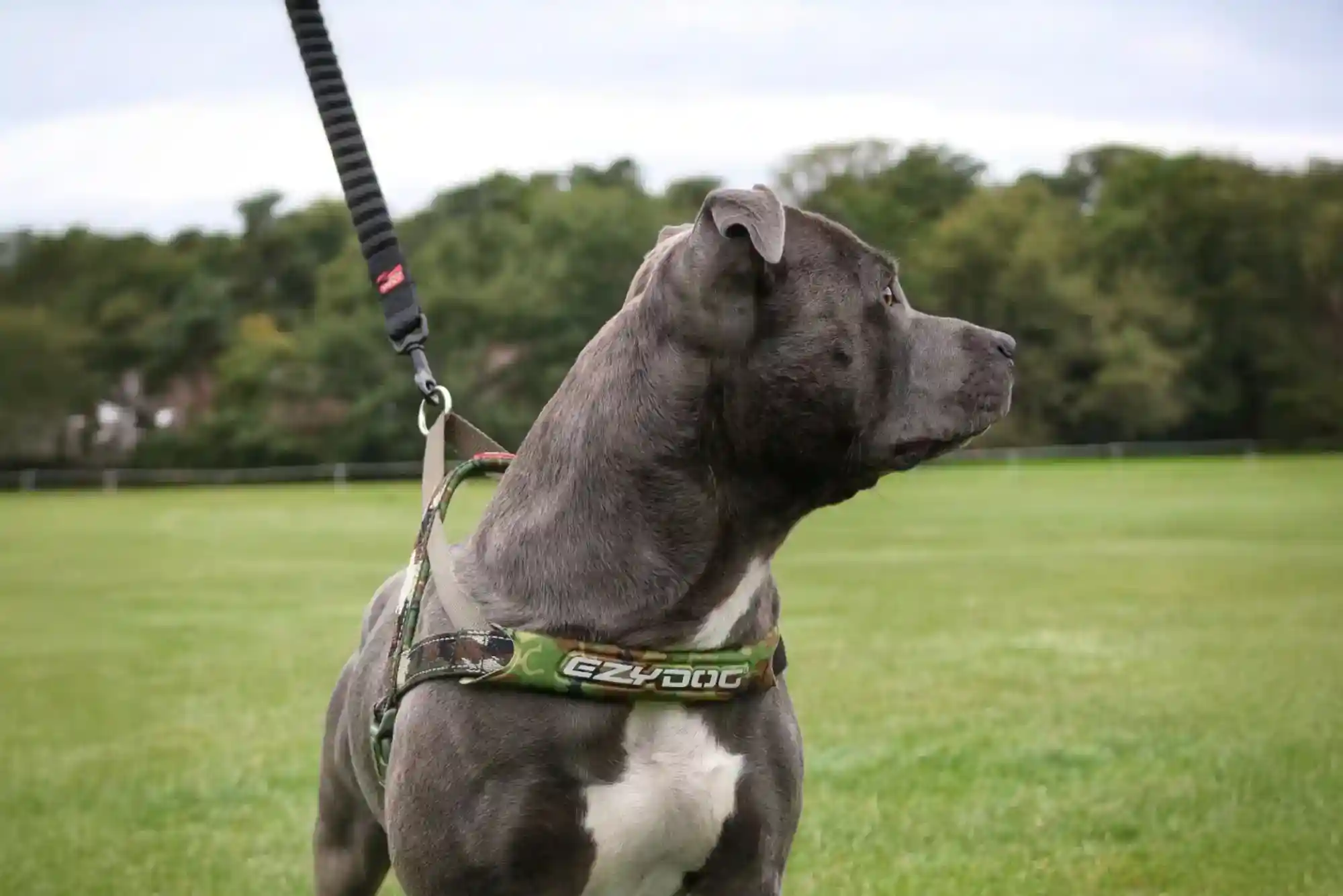
Introduction
Walking a powerful dog can be enjoyable until every walk becomes a battle against pulling, lunging, and sudden bursts of energy. Pitbulls, Boxers, American Bullies, and other strong pullers can put tremendous force through a leash. A lightweight harness that works well for a calm dog may stretch, shift, rub, or fail under that kind of pressure.
That is why choosing the best heavy duty no-pull harnesses requires more than simply looking for thick straps or a rugged appearance. A good harness needs to combine strength, secure fitting, comfortable construction, and effective leash control. It should help the handler manage forward movement while allowing the dog to walk, turn, sit, and move naturally.
A no-pull harness is not a replacement for training. Instead, it is a useful tool that can make loose-leash training more manageable. The right combination of equipment and positive reinforcement can turn frustrating walks into calmer, more controlled outings.
Why Strong Dogs Need Heavy Duty No-Pull Harnesses
Strong dogs can generate significant pulling force, especially when they become excited by another dog, wildlife, traffic, people, or an interesting scent. The problem is not limited to large breeds. Even a smaller dog with intense forward drive can place substantial stress on walking equipment.
The best heavy duty no-pull harnesses are designed to handle repeated tension while giving the handler better control. Durable webbing, reinforced stitching, secure buckles, and reliable leash attachment points are important characteristics.
However, heavy duty should not mean unnecessarily rigid or uncomfortable. The harness still needs to accommodate normal movement. If it restricts the shoulders, rubs behind the front legs, or constantly shifts position, it may create more problems than it solves.

A strong harness also needs to be correctly fitted. Even expensive equipment can become unreliable if it is too loose or positioned incorrectly.
What Makes the Best Heavy Duty No-Pull Harnesses?
There is no single harness that is perfect for every strong dog. Body shape, weight, chest girth, pulling style, and walking environment all affect the right choice.
Durable Materials and Hardware
Look closely at the construction. Strong webbing and reinforced stitching are essential because these components experience repeated tension during walks.
Hardware deserves equal attention. Metal buckles and sturdy D-rings can provide greater confidence than lightweight components, particularly for dogs that regularly lunge or pull.
For example, some heavy-duty harnesses designed specifically for powerful breeds use metal hardware and reinforced construction rather than relying entirely on plastic components.
Front-Leash Attachment
A front attachment point can be particularly helpful for a strong puller. When the leash connects near the chest instead of exclusively behind the shoulders, forward pulling can be redirected toward the handler.
This does not physically prevent a dog from pulling. Instead, it changes the mechanics of the pull and can make the dog easier to redirect.
Some designs provide both front and back attachment points, allowing owners to choose the connection that best suits the situation.
Secure, Adjustable Fit
Fit is one of the most important factors when choosing a harness for a muscular dog. A harness should be snug enough to remain stable without digging into the skin.
Measure your dog’s chest according to the manufacturer’s instructions rather than choosing a size based only on weight. Two dogs weighing the same amount can have completely different proportions.
Pay special attention to dogs with broad chests and narrower waists. If the harness can easily slide toward the shoulders or the dog can reverse out of it, another size or design may be necessary.
Comfort Around the Chest and Shoulders
Strength is useless if the harness causes discomfort. Look for padding or smooth materials around areas where straps contact the dog’s body.
The front legs and armpits deserve particular attention. After a walk, check for redness, hair loss, or irritated skin. These signs may indicate that the harness needs adjustment or that its shape is not appropriate for your dog.
Best Heavy Duty No-Pull Harnesses for Pitbulls
Pitbull-type dogs are often compact, muscular, and powerful relative to their size. Their broad chest and strong shoulders make stability especially important.
The best heavy duty no-pull harnesses for Pitbulls should sit securely around the chest while leaving adequate room for the front legs. A front attachment can also provide useful redirection when the dog tries to surge ahead.
Dedicated strong-dog harnesses are available with both front and rear D-rings, reinforced construction, and heavy-duty hardware. The Summit Hound No Pull Bully Proof Harness, for example, is specifically marketed toward Pitbulls and other powerful breeds and provides front and back leash attachment points.
Another important consideration is escape resistance. A determined Pitbull may be able to reverse out of a poorly fitted harness, particularly if the harness is loose around the chest.
For that reason, always check the fit before every walk. A harness that fitted perfectly several months ago may become loose after weight changes or normal material wear.
Best Heavy Duty No-Pull Harnesses for Boxers
Boxers have an athletic build that can make harness fitting slightly different from fitting other large breeds. They tend to have deep chests, strong shoulders, and plenty of energy.
The best heavy duty no-pull harnesses for Boxers should provide stable chest coverage without interfering with shoulder movement. This is especially important because Boxers may switch quickly from walking calmly to pulling toward a distraction.
A harness with front and rear attachment options can be useful because it gives owners more flexibility. You may prefer the front connection during training and use the rear attachment during relaxed walks once leash manners improve.
Watch your Boxer walk naturally after putting the harness on. The harness should stay relatively stable as the dog turns, trots, sits, and changes direction.
If the straps repeatedly move into the armpits, the harness rotates significantly, or your dog appears uncomfortable, reassess the size and design.
Best Heavy Duty No-Pull Harnesses for Strong Pullers
Not every strong puller is a large breed. Some smaller and medium-sized dogs can pull remarkably hard because of their excitement, prey drive, or lack of leash training.
For these dogs, the best heavy duty no-pull harnesses should combine mechanical control with comfortable everyday use.
A dual-attachment design can be especially useful for persistent pullers. Some systems use a front chest connection together with a rear attachment or martingale-style feature to provide additional control. The 2 Hounds Design Freedom No-Pull Harness is one example of a design built around front and back connections.
For owners who want a more general-purpose option, the Ruffwear Front Range is another style worth considering. It provides both front and rear leash attachment points and focuses on padded everyday comfort while retaining a reinforced front clip for redirecting pulling.
The right choice depends on whether your priority is maximum anti-pull control, everyday walking comfort, outdoor activity, or a combination of these factors.
How to Fit a Heavy Duty No-Pull Harness Correctly
Even the best heavy duty no-pull harnesses will perform poorly if they are incorrectly fitted.
Start by measuring the dog’s chest at the widest point, following the manufacturer’s sizing instructions. Do not assume that your dog’s usual collar size corresponds to the correct harness size.
Once the harness is on, check that it sits securely without restricting breathing or movement. You should be able to fit a small amount of space between the straps and your dog’s body, but the harness should not hang loosely.
Walk your dog indoors or in a secure area before going outside. Watch for twisting, slipping, rubbing, or excessive movement.
It is also worth checking the fit regularly. Dogs can gain or lose weight, develop muscle, or simply wear equipment down through frequent use.
How to Use a No-Pull Harness With Training
A no-pull harness works best when paired with consistent loose-leash training.
Start in a low-distraction environment. Reward your dog whenever the leash remains loose and your dog chooses to stay near you. If the dog pulls toward something interesting, avoid turning the walk into a tug-of-war.
Instead, calmly redirect your dog and reward the return to a loose leash.
As your dog improves, gradually introduce more distractions. This teaches the dog that staying near you is rewarding even when exciting things are happening nearby.
The harness provides physical management, while training changes the behavior. That distinction is important because no piece of equipment can permanently eliminate pulling by itself.
Common Mistakes to Avoid When Choosing a Strong-Dog Harness
One common mistake is choosing a harness based purely on appearance. A thick, tactical-looking harness may look extremely strong but still fit poorly.
Another mistake is buying according to weight alone. Chest girth and body shape are often more useful measurements.
It is also easy to assume that tighter means safer. A harness should be secure, but excessive tightening can create discomfort and restrict normal movement.
Finally, do not ignore wear. Inspect the stitching, webbing, buckles, and leash rings regularly. A strong dog can expose weaknesses quickly, especially if the equipment is used every day.
Are No-Pull Harnesses Safe for Pitbulls and Other Strong Dogs?
A properly fitted no-pull harness can be a practical way to improve control while reducing reliance on pressure around the neck. However, safety depends heavily on the design, fit, and individual dog.
A harness should not cause rubbing, restrict shoulder movement, or shift excessively during normal activity. If your dog repeatedly lunges aggressively or you cannot safely control them even with appropriate equipment, professional help from a qualified reward-based trainer can be valuable.
Remember that “no-pull” is primarily a design goal, not a guarantee that a dog will never pull again.
How to Maintain a Heavy Duty Dog Harness
Regular maintenance can extend the useful life of your harness.
After muddy or wet walks, clean the harness according to the manufacturer’s instructions and allow it to dry completely. Dirt and moisture can contribute to material deterioration over time.
Before each walk, quickly inspect the leash ring and buckles. Look for frayed webbing, loose stitching, cracks, bent hardware, or damaged adjustment points.
Replace the harness if any critical component becomes compromised. With a powerful dog, waiting for a complete failure is not worth the risk.
Choosing the Right Harness for Your Dog
The best heavy duty no-pull harnesses are not necessarily the most expensive or the heaviest. The best option is the one that matches your dog’s body shape, strength, behavior, and walking routine.
For a Pitbull, prioritize a secure chest fit, strong hardware, and reliable front attachment. For a Boxer, pay particular attention to shoulder clearance and stability around the deep chest. For an exceptionally strong puller, a dual-attachment design may offer greater handling flexibility.
Above all, prioritize fit and comfort. A harness that your dog can wear comfortably while giving you dependable control is far more useful than one that simply looks tough.
Choose Strength, Fit, and Control
Finding the best heavy duty no-pull harnesses for Pitbulls, Boxers, and strong pullers requires looking beyond marketing claims. Durable construction, reliable hardware, secure fitting, comfortable materials, and useful leash attachment points all matter.
A well-fitted harness can make walks easier to manage, but the best results come when equipment is combined with patient, reward-based loose-leash training. Take accurate measurements, inspect the harness regularly, and pay attention to how your dog moves while wearing it.
If your current harness slips, rubs, twists, or struggles to handle your dog’s strength, it may be time for an upgrade. Choose a properly fitted heavy-duty design and pair it with consistent training to make every walk safer, calmer, and more enjoyable.
FAQs
What is the best harness for a Pitbull that pulls?
A strong front-clip or dual-attachment harness can be a good choice for a Pitbull that pulls. Look for durable hardware, secure adjustment, and enough chest coverage to keep the harness stable without restricting movement.
What is the best harness for a Boxer that pulls?
A Boxer generally benefits from a stable harness that accommodates its deep chest while keeping the shoulders free. A front attachment can help redirect forward pulling during training, while a rear attachment can work well for calmer walks.
Do no-pull harnesses really work?
Yes, they can make strong dogs easier to manage by changing how leash pressure is applied and improving the handler’s ability to redirect movement. However, they do not replace loose-leash training. Consistent reinforcement is still essential.
Is a front-clip harness better for strong pullers?
A front-clip harness can provide better leverage and redirection for many strong pullers. It can make it harder for a dog to put its full body weight directly behind forward movement. However, the design must still fit correctly and allow comfortable movement.
Should a strong dog wear a collar and harness together?
Using both can provide an additional point of control, depending on the dog’s behavior and the walking setup. The harness should remain the primary walking connection when appropriate, while the collar can provide identification and backup security.
How tight should a no-pull harness be?
A no-pull harness should be snug enough that it does not rotate, slide, or allow the dog to back out, but it should not be so tight that it causes rubbing or restricts movement. Always follow the manufacturer’s fitting instructions.
Can a Pitbull escape from a harness?
Yes, particularly if the harness is poorly fitted or the design does not suit the dog’s body shape. Strong dogs can reverse out of loose equipment, so check the fit carefully and supervise your dog during walks.
Are heavy-duty harnesses better than regular harnesses?
For strong pullers, heavy-duty construction can provide greater durability and more reliable hardware. However, “heavy duty” alone does not make a harness better. Fit, comfort, movement, and leash control are equally important.

