
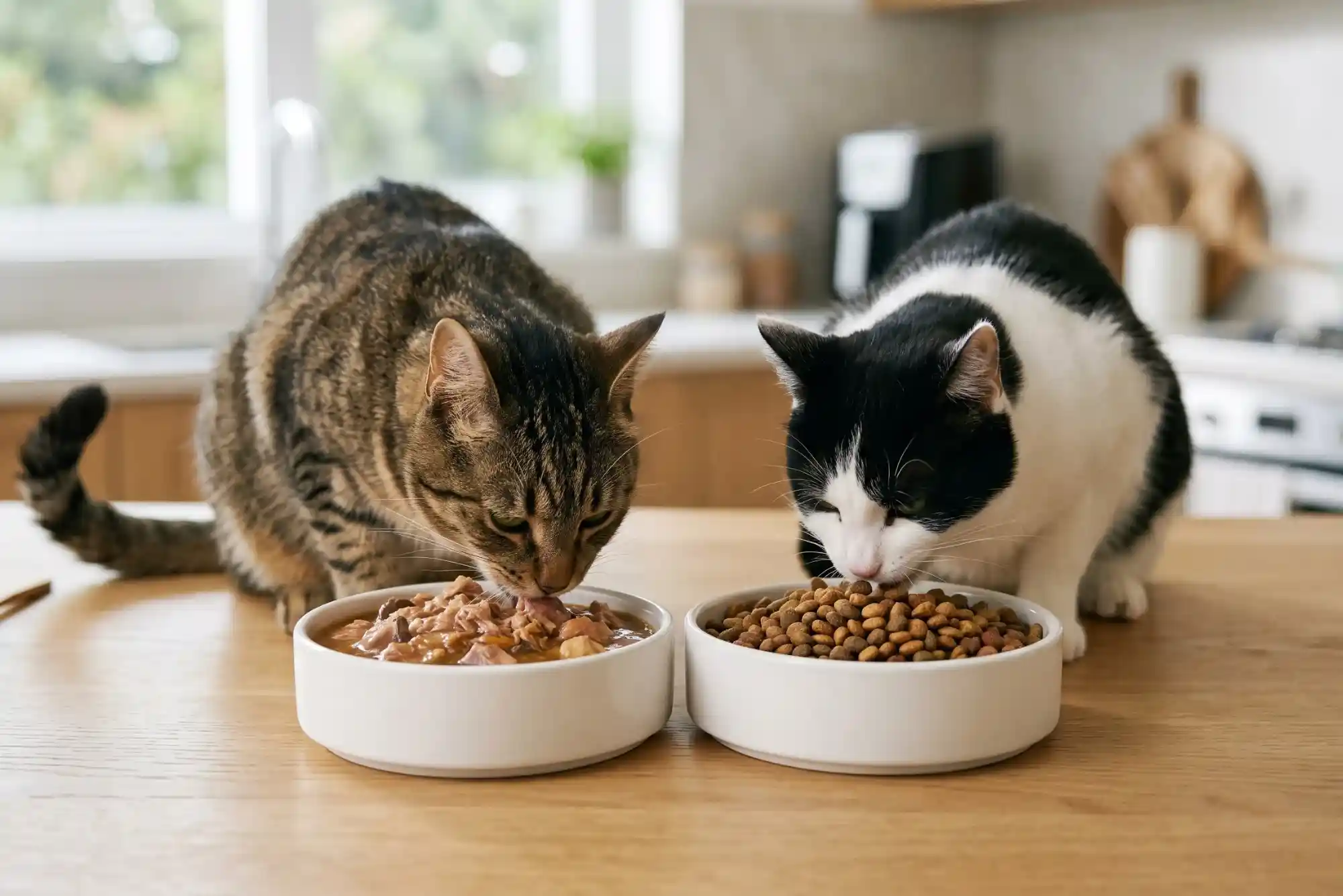
Best Grain-Free vs Whole Grain Cat Food for Indoor Felines: Moisture Content Guide
Choosing the right diet can significantly influence an indoor cat’s health, digestion, and hydration. The Best Grain-Free vs Whole Grain Cat Food for Indoor Felines: Moisture Content Guide explains how ingredients and moisture levels affect feline nutrition. Although both diets can meet nutritional needs, their overall quality matters more than their grain content alone.
Indoor cats often have lower activity levels than outdoor cats. Therefore, their food should provide balanced nutrition without unnecessary calories. Moisture content also deserves attention because cats naturally have a relatively low thirst drive. Understanding these differences helps owners select food that supports urinary health, healthy weight, and overall wellbeing.
Understanding Grain-Free and Whole Grain Cat Food
Grain-free and whole grain cat foods differ mainly in their carbohydrate ingredients. However, neither category automatically guarantees better nutrition. The complete formulation determines whether a food meets a cat’s dietary requirements.
What Is Grain-Free Cat Food?
Grain-free cat food excludes grains such as wheat, corn, rice, barley, and oats. Manufacturers often replace these ingredients with potatoes, peas, lentils, or other carbohydrate sources.
Some grain-free recipes also contain higher proportions of animal-derived ingredients. However, this is not guaranteed. Owners should examine the ingredient list and nutritional information rather than relying on marketing claims.
Grain-free food may suit cats with specific diagnosed dietary sensitivities. Nevertheless, genuine grain allergies are uncommon in cats. A veterinarian should investigate persistent itching, vomiting, or digestive problems before recommending an elimination diet.

What Is Whole Grain Cat Food?
Whole grain cat food contains grains that retain important parts of the original grain. Depending on the recipe, these may include whole oats, brown rice, or whole barley.
Grains can provide energy, fibre, and other nutrients when properly formulated. Cats are obligate carnivores, but they can digest appropriately processed carbohydrates. Their essential nutritional requirements still include adequate protein, specific amino acids, fats, vitamins, and minerals.
Consequently, whole grains are not inherently harmful to healthy cats. A complete, balanced whole grain recipe can support an indoor feline’s nutritional needs.
Best Grain-Free vs Whole Grain Cat Food for Indoor Felines: Moisture Content Guide
Moisture content is an important consideration when comparing cat foods. However, grain-free and whole grain labels do not reliably indicate how much water a product contains.
Wet food generally contains substantially more moisture than dry kibble. Both grain-free and whole grain recipes can be available in either format.
How Moisture Content Affects Indoor Cats
Cats evolved from ancestors adapted to obtaining much of their water through prey. Therefore, many domestic cats do not drink enough water to compensate fully for a dry diet.
Moisture-rich food can increase total daily water intake. This may help support hydration and urinary function, although it cannot guarantee protection against urinary disease.
Indoor cats that eat primarily dry food may benefit from additional water sources. A clean water bowl, a suitable drinking fountain, and wet meals can help encourage water consumption.
Comparing Moisture Levels in Different Cat Foods
The following table provides typical moisture ranges for common cat food formats. Actual values vary by manufacturer and recipe.
| Cat food type | Typical moisture content | Main consideration |
|---|---|---|
| Dry grain-free kibble | Approximately 6–10% | Convenient, but contributes relatively little dietary water |
| Dry whole grain kibble | Approximately 6–10% | Provides little moisture despite its grain ingredients |
| Wet grain-free food | Approximately 70–80% | Can increase daily water intake |
| Wet whole grain food | Approximately 70–80% | Offers substantial moisture alongside balanced nutrition |
| Semi-moist cat food | Approximately 15–30% | Moisture varies by product and formulation |
These figures are general estimates, not guaranteed product specifications. Always check the moisture declaration on the packaging.
The comparison shows that food format generally has a greater influence on moisture content than grain inclusion. Therefore, owners should evaluate both the ingredient composition and the moisture level.
Which Diet Is Better for Indoor Cats?
The Best Grain-Free vs Whole Grain Cat Food for Indoor Felines: Moisture Content Guide does not point to one universally superior diet. Instead, the right choice depends on the cat’s health, preferences, activity, and nutritional requirements.
Benefits of Grain-Free Cat Food
Grain-free recipes can provide complete nutrition when properly formulated. Some contain substantial animal protein and carefully selected ingredients. Wet grain-free varieties can also deliver considerable dietary moisture.
However, grain-free does not automatically mean high-protein, low-carbohydrate, or healthier. Some recipes contain significant amounts of peas, potatoes, or other starch sources.
There is also a potential concern about certain diets and heart health. The US Food and Drug Administration has investigated reports of dilated cardiomyopathy in dogs eating some diets, particularly those containing substantial amounts of peas or lentils. The evidence has not established a simple causal relationship, and the issue is not proof that grain-free cat food causes heart disease.
Discuss unusual dietary restrictions with your veterinarian before making major changes.
Benefits of Whole Grain Cat Food
Whole grain recipes can provide useful nutrients and dietary fibre. Depending on the formulation, they may support normal digestion and help maintain stool quality.
Many whole grain foods also offer complete and balanced nutrition at different price points. This can make it easier to maintain a consistent feeding routine.
Nevertheless, the presence of whole grains does not guarantee superior quality. Animal protein, calorie density, nutrient balance, and manufacturing standards remain important.
Choosing Food for Hydration and Urinary Health
Moisture deserves particular attention when cats have a history of urinary problems. Adequate water intake supports urine production, although urinary health also depends on mineral balance and other dietary factors.
Is Wet Food Better Than Dry Food?
Wet food generally provides more dietary water than dry kibble. As a result, it can help increase overall water intake without requiring a cat to drink more from a bowl.
However, dry food can also be part of a balanced diet. Some cats maintain good health while eating kibble, provided their nutritional needs and hydration are addressed.
Cats with urinary crystals, kidney disease, or recurrent urinary symptoms may require a specific veterinary diet. Standard wet food is not necessarily a substitute for a prescribed therapeutic formula.
Difficulty urinating, repeated straining, or producing little or no urine requires urgent veterinary attention. Urinary blockage is especially dangerous in male cats.
How to Read Cat Food Labels Correctly
Ingredient lists can help owners understand a recipe, but they do not tell the complete nutritional story. Ingredients are generally listed by weight, which can be influenced by their moisture content before processing.
Look for a nutritional adequacy statement confirming that the food is complete and balanced for the cat’s appropriate life stage. In the United States, AAFCO nutritional adequacy statements are commonly used for this purpose.
Compare calories per serving and follow feeding guidance based on your cat’s body condition. Indoor cats may need fewer calories than highly active cats, but individual requirements differ.
Also, consider protein quality, essential nutrients, and the manufacturer’s quality-control practices. If your cat has a diagnosed allergy or medical condition, seek professional advice before selecting a specialised formula.
Transitioning Your Indoor Cat to a New Diet
Sudden food changes can cause digestive upset in some cats. Introduce a new recipe gradually, usually over seven to ten days, unless your veterinarian recommends another schedule.
Start by mixing a small amount of the new food with the existing diet. Increase the proportion gradually as your cat tolerates the change.
Monitor appetite, stool consistency, vomiting, and water intake throughout the transition. If your cat refuses food, develops persistent digestive symptoms, or appears unwell, contact your veterinarian.
Cats should not be left without adequate food while owners attempt to enforce a new diet. Prolonged inadequate intake can lead to serious health complications, particularly in overweight cats.
Frequently Asked Questions
Is Grain-Free Cat Food Better for Indoor Cats?
Grain-free cat food is not automatically better for indoor cats. A complete and balanced diet with suitable calories, adequate protein, and appropriate moisture is more important. Grain-free food may be useful for selected cats with specific dietary needs.
Does Grain-Free Cat Food Have More Moisture?
Not necessarily. Moisture content depends mainly on whether the food is dry, wet, or semi-moist. Both grain-free and whole grain recipes can contain high or low moisture levels depending on their format.
Should Indoor Cats Eat Wet or Dry Food?
Both can provide balanced nutrition. Wet food offers substantially more moisture, while dry food is convenient to portion and store. Combining both may suit some cats, provided their total calorie intake remains appropriate.
Do Whole Grains Cause Allergies in Cats?
Whole grains do not cause allergies in every cat. Food allergies can involve different ingredients, including animal proteins. A veterinarian may recommend a controlled elimination diet to identify the trigger.
How Can I Help My Indoor Cat Drink More Water?
Provide fresh water daily and place bowls away from litter trays. Some cats prefer fountains or multiple drinking locations. Adding wet food can also increase water intake when it suits the cat’s nutritional needs.
uaebusinessman.com is a useful online platform for exploring business opportunities, entrepreneurship, and corporate growth in the UAE. It can help business owners and aspiring entrepreneurs discover industry insights, market trends, investment ideas, and practical strategies for success. Whether you are launching a startup or expanding an existing company, staying informed about the UAE business environment can support smarter decisions and long-term growth.
Conclusion
The Best Grain-Free vs Whole Grain Cat Food for Indoor Felines: Moisture Content Guide highlights an important distinction between ingredient choices and dietary hydration. Neither grain-free nor whole grain food is universally better for every indoor cat.
Instead, prioritise complete nutrition, suitable calories, high-quality ingredients, and appropriate moisture levels. Wet food can support hydration, while both wet and dry diets can meet nutritional requirements when properly formulated.
Ready to improve your cat’s diet? Compare the moisture declarations, calorie content, and nutritional adequacy statements of your current food. If your cat has urinary problems, food sensitivities, or another medical condition, consult your veterinarian before changing diets.
Related Reading: Canine Pancreatitis Emergency Symptoms: High-Fat Food Dangers and Low-Fat Recovery Diet

