
Introduction
Fireworks and thunderstorms can turn a normally confident dog into a frightened, trembling pet. Loud bangs, sudden flashes, vibrations, and unpredictable sounds can trigger intense fear. If your dog hides, pants, shakes, barks, paces, or tries to escape whenever a storm or fireworks begin, the problem is more than simple nervousness. Fortunately, you can desensitize dogs to fireworks and thunderstorms with patient training, controlled sound exposure, positive reinforcement, and practical calming tools such as Thundershirts.
The most important principle is to work below your dog’s fear threshold. Turning a recording up loudly or forcing a frightened dog to “get used to it” can make the problem worse. Effective desensitization is gradual. You introduce the sound at a level your dog can tolerate, pair it with something positive, and slowly build confidence over time. Research and veterinary behavior guidance also support combining behavior modification with environmental management when noise fears are significant.
Why Dogs Are Afraid of Fireworks and Thunderstorms
Dogs experience loud sounds differently from humans. Fireworks produce sudden explosions, whistles, crackles, and vibrations with no predictable pattern. Thunderstorms can be equally challenging because thunder may continue for a long period and is accompanied by lightning, wind, rain, and atmospheric changes.
Some dogs react to the sound itself, while others become anxious because they associate dark skies, wind, or distant rumbles with an approaching storm. A dog that has previously experienced a frightening event may also develop a stronger response the next time a similar sound occurs.
Common signs include trembling, panting, pacing, hiding, whining, barking, drooling, refusing food, destructive behavior, and attempts to escape. Some dogs become unusually clingy, while others retreat somewhere they consider safe. These behaviors are signs of distress rather than stubbornness or disobedience.
Understanding this distinction matters. Punishing a frightened dog does not teach it that fireworks or thunder are safe. Instead, punishment can add another negative experience to an already frightening situation.

How to Desensitize Dogs to Fireworks and Thunderstorms
The goal of desensitization is to expose your dog to a trigger without allowing the trigger to cause overwhelming fear. This process is usually combined with counterconditioning, which means pairing the frightening sound with something your dog genuinely enjoys.
Start when there are no fireworks or storms happening. Find a high-quality recording of fireworks or thunder and play it at an extremely low volume. Your dog should be able to hear it without showing obvious signs of anxiety.
While the recording is playing, offer something enjoyable. This could be small food rewards, a favorite toy, gentle play, or another activity your dog already associates with positive experiences. The objective is to create a new association: unusual sound means good things happen.
If your dog remains relaxed during repeated sessions, increase the volume very slightly. Do not rush this stage. Some dogs may progress within weeks, while dogs with severe noise phobia can require months of carefully controlled work.
The most useful rule is simple: if your dog becomes frightened, the training has progressed too quickly. Reduce the volume or return to an easier level at the next session.
Using Sound Therapy for Fireworks and Thunder Anxiety
Sound therapy can be particularly useful because it allows you to control the intensity of the trigger. Unlike a real thunderstorm, a recording gives you control over volume, duration, timing, and repetition.
Begin with very short sessions. Play the recording quietly while your dog is relaxed in a familiar environment. Continue normal activities rather than making the sound itself the center of attention. If your dog happily eats, plays, rests, or interacts with you, you are working at an appropriate level.
Over time, gradually increase either the duration or volume. Avoid increasing both dramatically at once. The process should feel almost boring to the dog. That is a good sign.
Sound therapy works best when it is paired with positive reinforcement. If your dog loves a particular treat, reserve it for training sessions. If food is not motivating during sound exposure, use play or another reward instead. A dog that is already highly frightened may refuse food, which is another indication that the sound is currently too intense.
Background sound can also help during an actual storm. A television, fan, white-noise machine, or calming music may reduce the contrast between the sudden outdoor noise and the quieter indoor environment. It will not eliminate thunder, but it can make individual sounds less prominent.
How Thundershirts Can Help During Noise Events
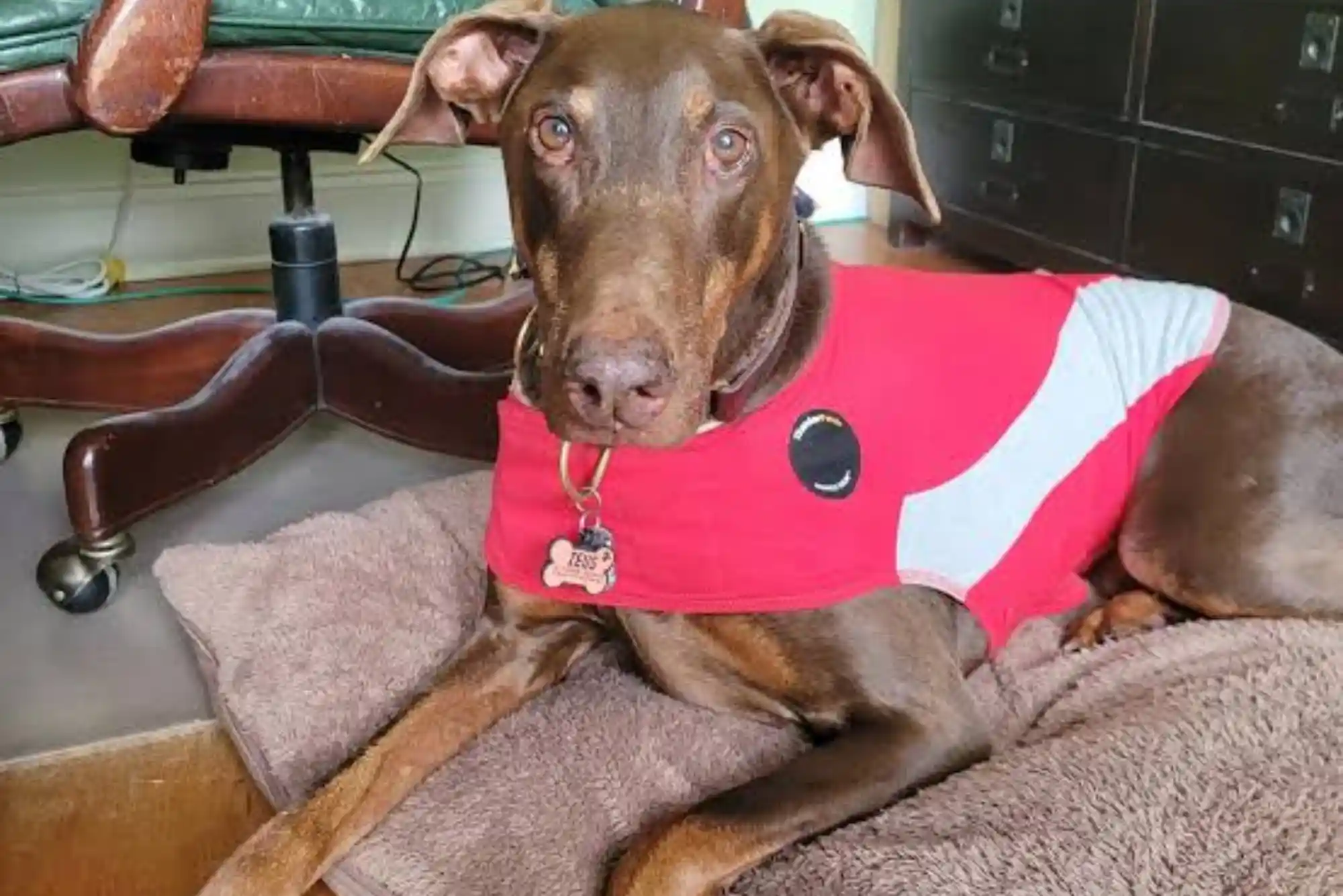
A Thundershirt is an anxiety wrap designed to provide gentle, consistent pressure around a dog’s torso. Some dogs appear calmer when wearing one during stressful situations such as fireworks, thunderstorms, travel, or other noise events.
A Thundershirt should not be viewed as a replacement for desensitization training. Instead, it can be one part of a broader management strategy. If your dog finds gentle pressure comforting, wearing an appropriately fitted anxiety wrap may help reduce visible signs of stress while you work on long-term behavior modification.
Introduce the shirt before fireworks or storms occur. Let your dog investigate it and reward calm interactions. Put it on for short periods when nothing frightening is happening. This prevents the dog from learning that the shirt only appears when something scary is about to happen.
Fit is important. The wrap should feel secure without restricting breathing, movement, or normal activity. Monitor your dog closely when introducing it. If your dog appears uncomfortable, tries repeatedly to remove it, or becomes more distressed, take it off and reconsider whether this particular tool is appropriate.
Evidence for pressure wraps is mixed, so individual responses vary. Some dogs benefit noticeably, while others show little change. That is why it is better to treat a Thundershirt as an optional support rather than a guaranteed solution.
Create a Safe Space Before Fireworks or a Storm
When you want to desensitize dogs to fireworks and thunderstorms, training should be supported by a comfortable environment. A frightened dog needs somewhere it can retreat without being disturbed.
Choose an interior area of your home where outside sounds and flashes are less noticeable. Close curtains or blinds when fireworks or lightning begin. Add familiar bedding, a favorite toy, and fresh water. Some dogs prefer a covered crate or den-like area, while others feel safer beside their owner.
Allow your dog to choose where it feels safest whenever possible. Do not drag a hiding dog out to “face its fear.” The purpose of a safe space is to give your pet control and reduce the intensity of the experience.
Background sound can also be useful. Soft music, television, or white noise may help mask some outdoor sounds. During storms, reducing visual stimulation can be helpful as well, particularly for dogs that react strongly to lightning flashes.
What to Do When Fireworks Actually Start
Training should ideally happen well before fireworks season, but preparation is still useful when an event is approaching.
Take your dog outside for exercise and toileting before fireworks are expected to begin. Once the noise starts, keep your dog indoors and make sure doors, windows, gates, and other escape routes are secure. A frightened dog can behave very differently from normal and may attempt to escape through an opening it would ordinarily ignore.
Stay calm and behave normally. You do not need to completely ignore your dog, nor should you dramatically react to every bang. If your dog seeks contact, calm affection is appropriate. If it wants to hide, give it space.
Never punish barking, trembling, hiding, or other fear-related behaviors. Your dog is communicating that it feels unsafe. The immediate goal is to prevent panic while giving your long-term desensitization training time to work.
How Long Does Desensitization Take?
There is no universal timeline for noise desensitization. A dog with mild sensitivity may become more comfortable relatively quickly, while a dog with a severe noise phobia may need months of gradual training.
Consistency is more important than speed. Short, successful sessions are generally more useful than long sessions that push a dog beyond its comfort zone.
You should also expect occasional setbacks. A particularly intense storm or unexpected fireworks display can temporarily increase sensitivity. This does not necessarily mean that your training has failed. Return to an easier sound level and rebuild gradually.
Professional support can make a major difference when fear is severe. A veterinarian can also assess whether medical treatment should be part of the plan, particularly if your dog panics, injures itself, destroys doors or windows, or repeatedly attempts to escape.
Can You Desensitize an Adult Dog to Fireworks?
Yes. Adult dogs can learn new associations, although the process may require more patience than training a young puppy.
Do not assume that an older dog is permanently traumatized or incapable of improvement. Start with the same principle: controlled exposure below the fear threshold followed by positive reinforcement.
An adult dog with years of fireworks-related fear may need a slower progression. If the dog has developed generalized anxiety or reacts to several different noises, professional behavioral guidance is especially worthwhile.
The key is to avoid accidental flooding. Exposing a severely fearful dog to full-volume fireworks in the hope that it will eventually “give up” is not the same as structured desensitization.
Mistakes That Can Make Noise Fear Worse
One of the biggest mistakes owners make is increasing sound volume too quickly. A dog that was calmly eating treats at a low volume may suddenly panic when the recording becomes louder. Once fear appears, learning becomes much harder.
Another mistake is beginning training only when fireworks are already exploding outside. Real-world fireworks are unpredictable and often much more intense than a recording. Preparation should ideally begin weeks or months in advance.
It is also unhelpful to force interaction. If your dog wants to hide, allow it to retreat to a safe location. Similarly, do not force your dog to wear an anxiety wrap if it clearly dislikes the sensation.
Finally, avoid assuming that one technique will work for every dog. Sound therapy, environmental changes, positive reinforcement, anxiety wraps, and veterinary treatment can all have different effects depending on the individual dog.
When Should You Talk to a Veterinarian?
Veterinary advice is important when your dog’s fear is severe, worsening, or interfering with normal life. A professional can help rule out medical factors and recommend a behavior plan suited to your dog’s specific needs.
Contact your veterinarian if your dog attempts to escape, injures itself, cannot settle for long periods, refuses food or water during noise events, becomes destructive, or experiences extreme panic.
For some dogs, behavioral training alone may not be enough. Veterinarians can discuss appropriate anxiety medication when necessary. Medication should be selected and administered under veterinary guidance rather than using human medication or unverified calming products.
The best outcomes often come from combining management, gradual desensitization, positive reinforcement, and professional support when needed.
Start Before the Next Storm
Learning how to desensitize dogs to fireworks and thunderstorms is a gradual process, but it can make a meaningful difference to a fearful pet. Sound therapy helps your dog become accustomed to triggers in a controlled way, while positive reinforcement creates better emotional associations. A safe room can reduce environmental stress, and a Thundershirt may provide additional comfort for dogs that respond well to gentle pressure.
The most important thing is to start before the next major fireworks display or thunderstorm. Keep sessions short, progress slowly, watch your dog’s body language, and never force exposure. If your dog’s fear is severe, involve your veterinarian or a qualified behavior professional rather than trying to manage extreme anxiety alone.
FAQs
How do I desensitize my dog to fireworks?
Start with a fireworks recording at a very low volume while your dog is relaxed. Pair the sound with treats, play, or another positive experience. Gradually increase the volume only when your dog remains comfortable. If anxiety appears, lower the volume and slow the progression.
How do I desensitize my dog to thunder?
Use recorded thunder during calm periods and begin at a barely noticeable volume. Reward relaxed behavior and gradually increase the intensity over multiple sessions. Because real storms involve more than sound, also prepare a quiet safe space and reduce exposure to lightning and other triggers.
Do Thundershirts really help dogs with anxiety?
Some dogs appear calmer when wearing a properly fitted Thundershirt or similar anxiety wrap, while others show little benefit. It is best used as a supportive tool alongside behavior modification rather than as a standalone cure.
How long does it take to desensitize a dog to thunderstorms?
It can take several weeks or months, depending on the dog’s fear level, previous experiences, consistency, and response to training. Severe noise phobia generally requires a slower approach and may benefit from professional guidance.
Should I comfort my dog during fireworks?
You can calmly comfort your dog if it seeks reassurance. Avoid frantic reactions or forcing your dog to interact. Give it access to a safe space and allow it to choose whether it wants contact or solitude.
Can I train my dog during an actual thunderstorm?
It is generally better to conduct formal desensitization sessions when the environment is calm and predictable. During a real storm, focus primarily on keeping your dog safe and reducing stress. Training can resume later at a controlled intensity.
Related Reading: Canine Pancreatitis Emergency Symptoms: High-Fat Food Dangers and Low-Fat Recovery Diet — full guide

